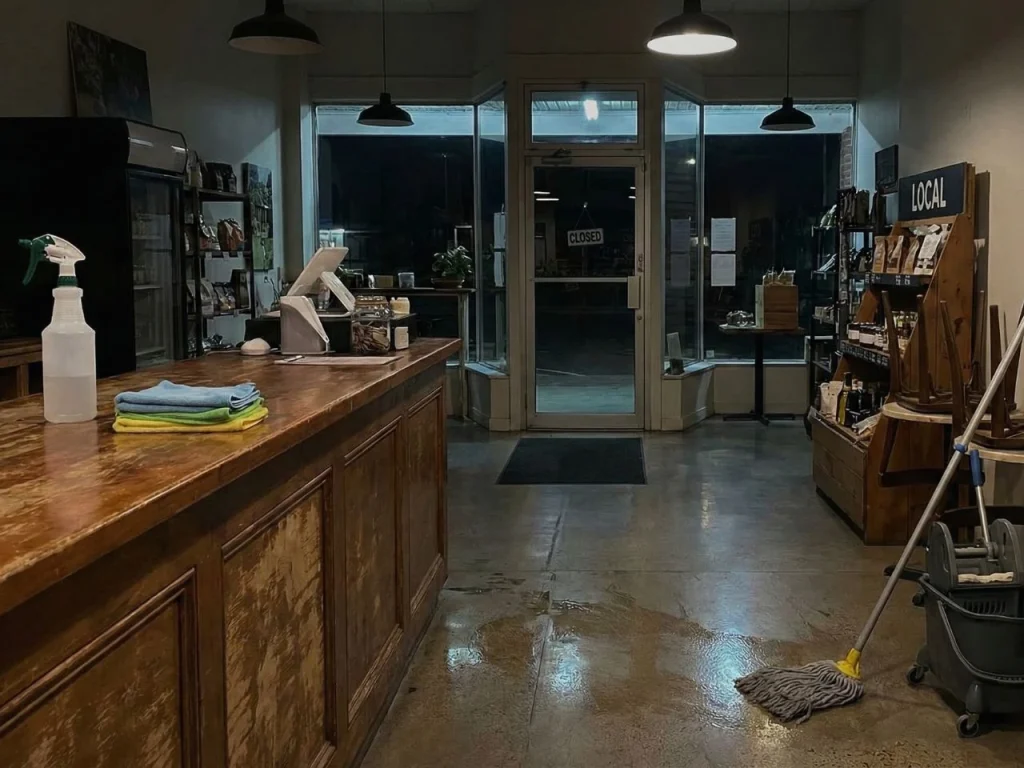
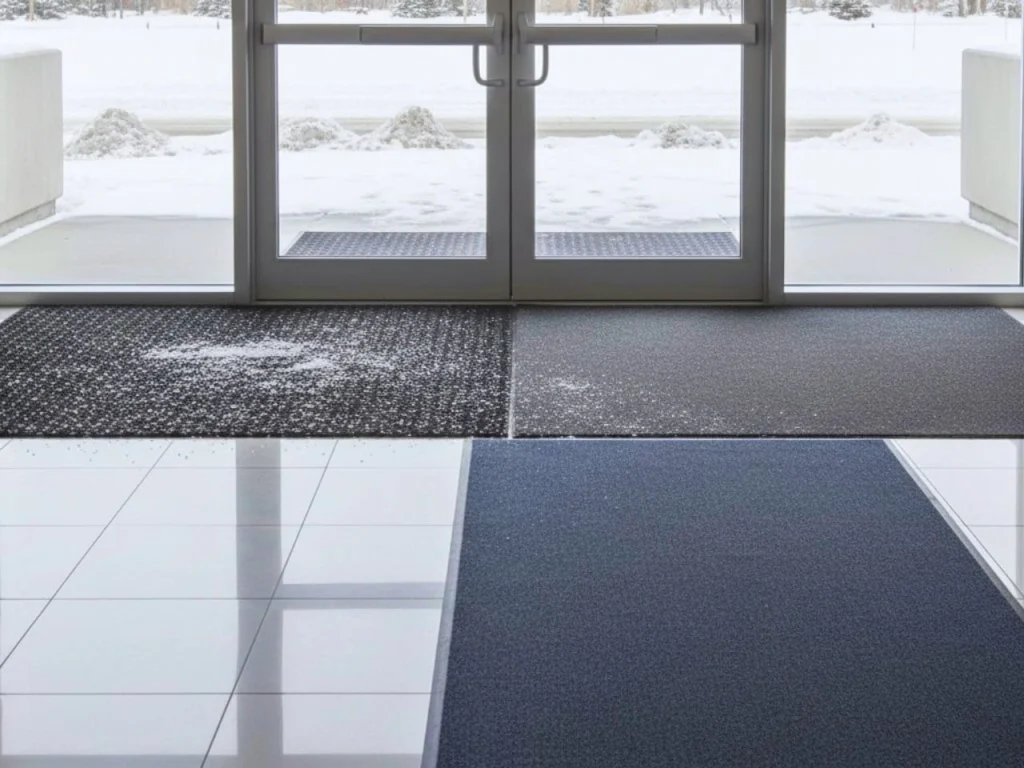
Why floor care is important for your office? Walk into any office after a snow burst and you can smell the wet rubber and see the white crust on the tile. That haze is dissolved ice melt. It dries into a film that looks bad, gets slick, and chews through floor finish. You can stop most of it before it becomes a problem, and you do not need fancy equipment to start.
Start at the door and cut the problem in half
Every shoe should touch matting five or six times before it hits your finished floor. That usually means 15 to 20 feet of coverage from the first step inside to the edge of the lobby. Use a coarse scraper outside, a brush-texture mat just inside, then a long, thirsty runner. If people are stepping around your mats, widen them and run them wall to wall.
I watched a Pittsfield office swap two small throw rugs for a single 18-foot runner. Salt tracked in dropped by about half on day one. Their cleaners finished faster because they were not chasing new puddles at 4 p.m.
If you want help sizing mats and setting daily routines, consult professional office cleaners and make it easy to ask for a walkthrough.
Use the right rinse so floors look clear, not cloudy
Most winter residue is calcium chloride. Warm water and a mop just smear it around. Use a neutralizing cleaner a few times a week during storm cycles. Mix it correctly, apply with a microfiber flat mop or autoscrubber, and pick it up in one pass. Do not swing a string mop through a grey bucket. That only redeposits the problem.
For small suites, keep a dual-chamber bucket or pre-soaked microfiber pads so clean solution stays clean. For larger lobbies, a compact autoscrubber pays for itself in one season because it scrubs, rinses, and vacuums dry in a single lap. If your team does not have that gear or time, you can find a reliable Recurring Office Cleaning service provider in your area.
Set winter-only frequencies and hold the line

What works in September will not hold in February. Tighten your schedule for eight to ten weeks. Quick mid-day passes on entry zones and main corridors keep things safe when the afternoon rush hits with wet boots. Restrooms and break areas still need care, but entries drive most winter risk.
Pick three times: right after opening, mid-day, and about an hour before close. In each hit, dewater saturated mats with a wet vac, run a fast neutralizing pass where people step off the runner, and put out fresh caution signs where the public can actually see them, not tucked behind a trash can.
Protect the finish you already paid for
VCT needs a buffer coat before winter. LVT needs the right pad and chemistry. Stone needs sealed pores and no harsh acids unless you are following with a neutral rinse. The goal is simple. Give yourself a sacrificial layer that can take the brunt of the salt so you are not grinding grit into the base material.
If your space was just remodeled and dust is still in the system, schedule a one-time deep prep so the winter routine lands on a clean surface. You can look for a Post-Construction Cleaning service when a buildout is wrapping and floors need a proper reset before the snow starts.
Do not forget carpet and chair mat zones
Salt rides in on shoes and drops along edges, under chairs, and at transitions. That crunchy feel is residue drying in the fibers. Treat those lanes with a slightly acidic rinse and extract with warm water. Dry fast with air movers so the white line does not wick back.
A facility manager in Lenox shared that they kept scrubbing the same white track in a corridor with a high-alkaline cleaner. The fix was switching to a neutralizing rinse, brushing it in, then extracting. One pass, stain gone, and no haze under downlights.
Make fast response part of your culture
This is the cheapest control you will ever put in place. Keep a small cleanup kit at the door. Cordless wet vac, stack of microfiber, spray bottle of neutralizer, and three bright caution signs. Assign a midday “entry check” to someone who already walks the floor. If they can dry a puddle in sixty seconds, they will, and you will cut slip risk dramatically.
When your building has multiple tenants and a shared lobby, coordination matters. Create a simple text thread for snow days so anyone can ping “wet by elevators.” The first winter one Pittsfield complex tried this, slip incidents went to zero. Not because they bought new machines. Because they responded fast.
Green options that actually work
You can clear salt film without harsh fumes. Low-VOC neutralizers exist and pair well with cold-water dilution systems. HEPA vacuums matter, too. Winter brings fine salt dust that settles on everything. A vacuum with sealed HEPA keeps that out of return air and away from desks and equipment.
If a tenant has fragrance-free policies, tell them upfront. Clean should smell like nothing. Your techs will appreciate the lighter products on long shifts, and tenants will not complain about scent.
DIY or hire. Here is the practical split.
| Task | DIY works when you have… | Call a pro when you see… |
|---|---|---|
| Entry mat program | Enough length and a wet vac to dewater midday | Undersized mats, curled edges, recurring puddles at the same transition |
| Daily neutralizing clean | Staff trained on microfiber and dual-chamber buckets | 5,000 sq ft of hard surface or more and constant afternoon haze |
| Carpet salt tracks | A portable extractor and a few trouble areas | Long white lanes that wick back after drying |
| Finish protection | A fall maintenance coat and weekly burnish plan | Patchy finish, yellowing, or bare lanes that need a scrub and recoat |
| Stone care | Simple neutral cleans | Dull traffic lanes, etching, or a need for honing and reseal |
Quick field checks that tell you the truth
Count steps on matting at 8:30 a.m. If most people hit only three steps before tile, extend your runner this week. Touch the mat at noon. If it squishes, dewater it or swap it. Kneel and look across the floor under bright light. If you see swirl marks and haze, your rinse is wrong or the pad is too aggressive. Fix the chemistry first. Try a soft white or red pad before you blame the product.
Small repairs that prevent big puddles
Replace door sweeps so meltwater does not blow under the vestibule. Level threshold ramps that leave a shallow channel where water pools. Adjust floor stops so doors close fully and do not drag water inward. One Pittsfield client had a chronic puddle near the mailroom every time wind kicked up. A ten-dollar sweep and a short runner solved it overnight.
Write the storm plan on one page
Name who sets mats the night before a storm. Who mixes neutralizer bottles. Who runs the midday pass. Where the air movers live. How to reach backup if the snow hits during lunch. Pin that sheet near the entry kit. When everyone knows what to do, nobody hesitates.
What “good” looks like in February
No white film under the downlights. Clear, dry transitions from runner to tile. Mats that feel damp, not soaked. No chemical smell when you walk in. People moving at a normal pace. Cleaners finishing on time because they are not re-mopping the same lane.
That is your scoreboard. When you see it, you know the plan is working.
Ready to lock this in
If you want a quick sanity check, start with an entry walkthrough and a trial neutralizing pass in your busiest lane. That forty-five minutes will tell you exactly where to invest first. If you need backup, point decision-makers to Commercial Cleaning, F&T Cleaning is just one call away.