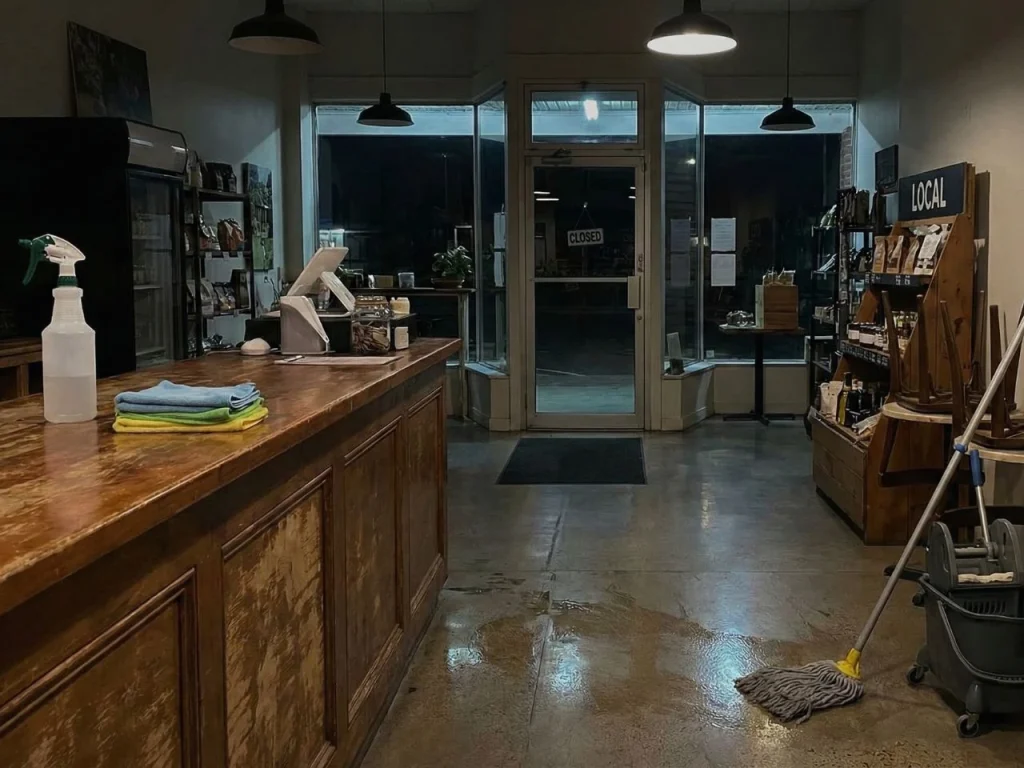
If you run a small shop in Berkshire County, you already know the closing routine can feel chaotic. Lights off, till counted, alarms set, one last customer at the door… and somewhere in that rush, cleaning gets squeezed into the last few minutes.
The good news: you do not need a full deep clean every night. What you need is a simple, repeatable 12–30 minute checklist that keeps the shop looking good, protects your floors and fixtures, and keeps staff from staying late.
Below is a practical plan you can hand to your team.
Think in time blocks, not perfection
Instead of “clean everything,” think in 5 minute chunks. Your goal is “good enough clean every day” plus periodic deep cleaning, which is where a company like F&T Cleaning can step in.
A simple way to plan:
| Time block | Focus area |
|---|---|
| Minutes 1–5 | Trash and obvious mess |
| Minutes 6–10 | Counters and touchpoints |
| Minutes 11–15 | Restroom quick reset |
| Minutes 16–25 | Floors |
| Minutes 26–30 | Final walk-through |
If you only have 20 minutes, you cut the last block or do a faster version of the floors.
Step 1: Quick reset of the space (first 5 minutes)
Real life example: In a small gift shop in Pittsfield, staff used to start with mopping. It ate up their time while trash, cups and packaging still sat out. Swapping the order made the store feel cleaner in less time.
At closing, do this first:

- Toss visible trash and food containers
- Empty front-of-house bins that are at least half full
- Put stray items back on shelves or into a “to sort tomorrow” basket
- Straighten main displays that face the door
This creates the “first impression clean” customers notice in the morning.
Step 2: Wipe the places people actually touch (5–10 minutes)
Focus only on high-touch and highly visible spots:
- Checkout counter and card machine
- Door handles, push plates, railings
- Glass at kid-height near the door
- Any ledges where dust and crumbs collect
Use ready-to-go supplies:
- A small caddy with spray cleaner, disinfectant wipes, microfibre cloths
- One set kept near the till so staff do not go hunting in the back
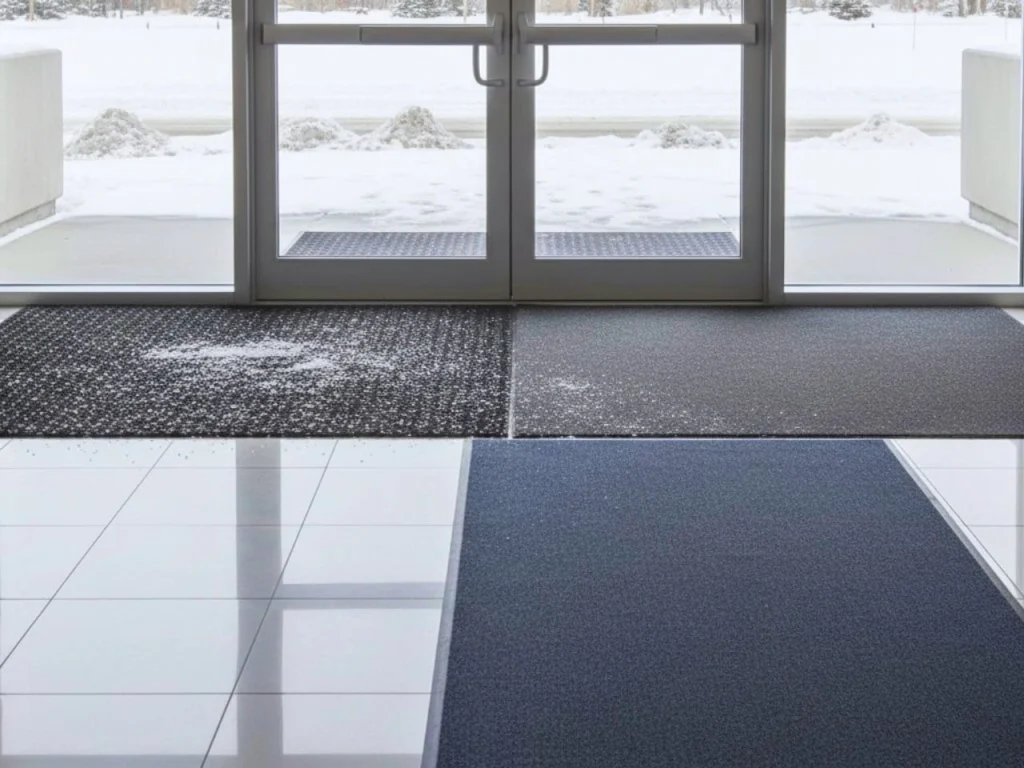
In winter, add a quick wipe around the door where salt spray and slush marks build up.
Step 3: Restroom “good enough” reset (5 minutes)
This is not a deep clean, it is a reset so nobody walks into a disaster tomorrow.
- Check toilet, give a quick brush if needed
- Wipe seat and flush handle
- Wipe sink and tap
- Refill soap and paper if low
- Empty bin if it is more than half full
- Quick spot mop if there are obvious drips
Tip: Post a tiny checklist on the back of the restroom door so closing staff can follow it without thinking.
Step 4: Smart floor routine (10 minutes)
Floors are where small shops lose the most time.
A realistic nightly routine:
- Quickly pick up any large debris
- Vacuum or sweep main traffic lanes, not every corner
- Spot clean obvious spills or salt marks
- Do a fast mop of only:
- Front entrance area
- Around the counter
- Any visibly dirty patch
Once or twice a week, schedule a slower, more detailed floor clean, or bring in F&T Cleaning for machine scrubbing and deeper work, especially in winter when salt and sand grind into surfaces.
Step 5: Final 2 minute walk-through
Before lights off:
- Stand at the entrance and do a slow look around
- Check:
- No obvious trash on surfaces
- Front mat straight
- Main display neat
- No “gross surprises” in view
If it looks clean from the door, customers will feel the space is cared for, even if the stock room is not perfect.
When to bring in professional help
A 20–30 minute staff routine keeps things under control. It does not replace:
- Deep floor cleaning, especially after a snowy stretch
- High dusting and vents
- Detailed restroom descaling
- Back room and stock area overhauls
Many small shops in places like Pittsfield, Great Barrington or North Adams use a model like this:
- Staff handle the nightly 20–30 minute reset
- A professional team like F&T Cleaning comes weekly, fortnightly or monthly for deeper work
That way, your staff get home on time, your shop looks consistently clean, and you are not relying on “when we have time” to protect your business image.